ANSI Bushing
ANSI Standard Transformer Bushing Introduction
Transformer bushings are critical insulation and conductive components that safely lead high‑voltage and low‑voltage leads from inside oil‑immersed transformers, reactors, and switchgear to the exterior tank. In the North American power system and global markets following American standards, ANSI/IEEE standard transformer bushings have become the mainstream solution due to their unified specifications, reliable performance, and strong interchangeability. This article systematically introduces the definition, standards, structural design, material characteristics, technical performance, application scenarios, and selection principles of ANSI‑standard transformer bushings.
1. Applicable Standards and Normative Basis
ANSI‑style transformer bushings strictly comply with ANSI/IEEE C57.19.00, C57.19.01, and C57.19.02 series standards, which specify dimensional interfaces, electrical ratings, thermal performance, mechanical strength, and test requirements. These standards unify mounting flange dimensions, bolt‑circle diameters, gasket seating, and terminal configurations, ensuring cross‑brand compatibility and easy replacement in grid operation and maintenance. Compared with IEC or DIN standards, ANSI bushings feature distinct external connection forms—commonly threaded studs, spade terminals, or draw‑lead mechanisms—and standardized voltage classes including 1.2 kV, 15 kV, 25 kV, 34.5 kV, and 38 kV, covering low‑voltage distribution to medium‑voltage power transmission scenarios.
2. Core Functions and Structural Design
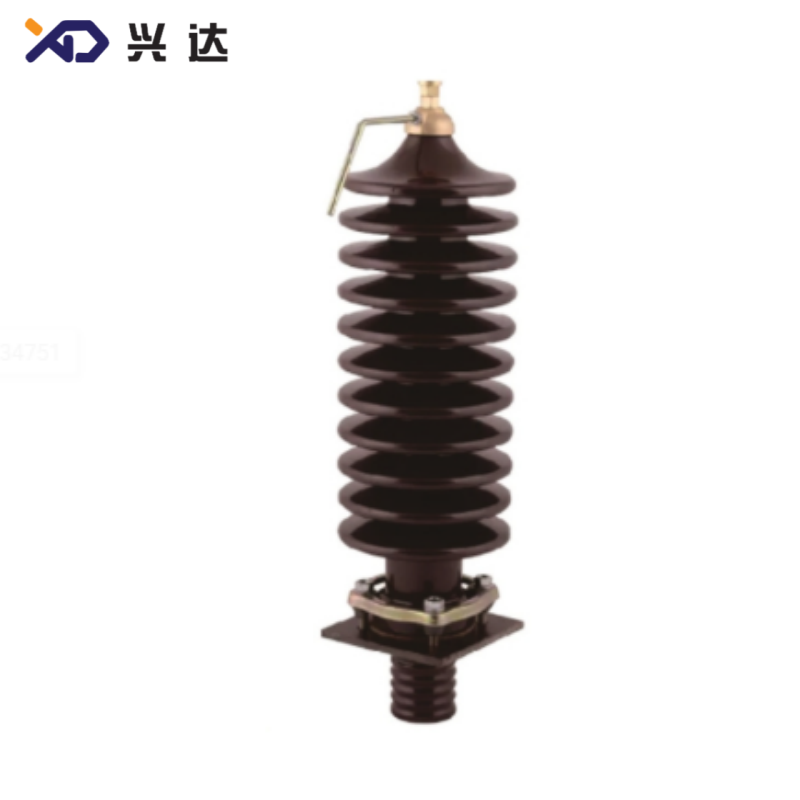
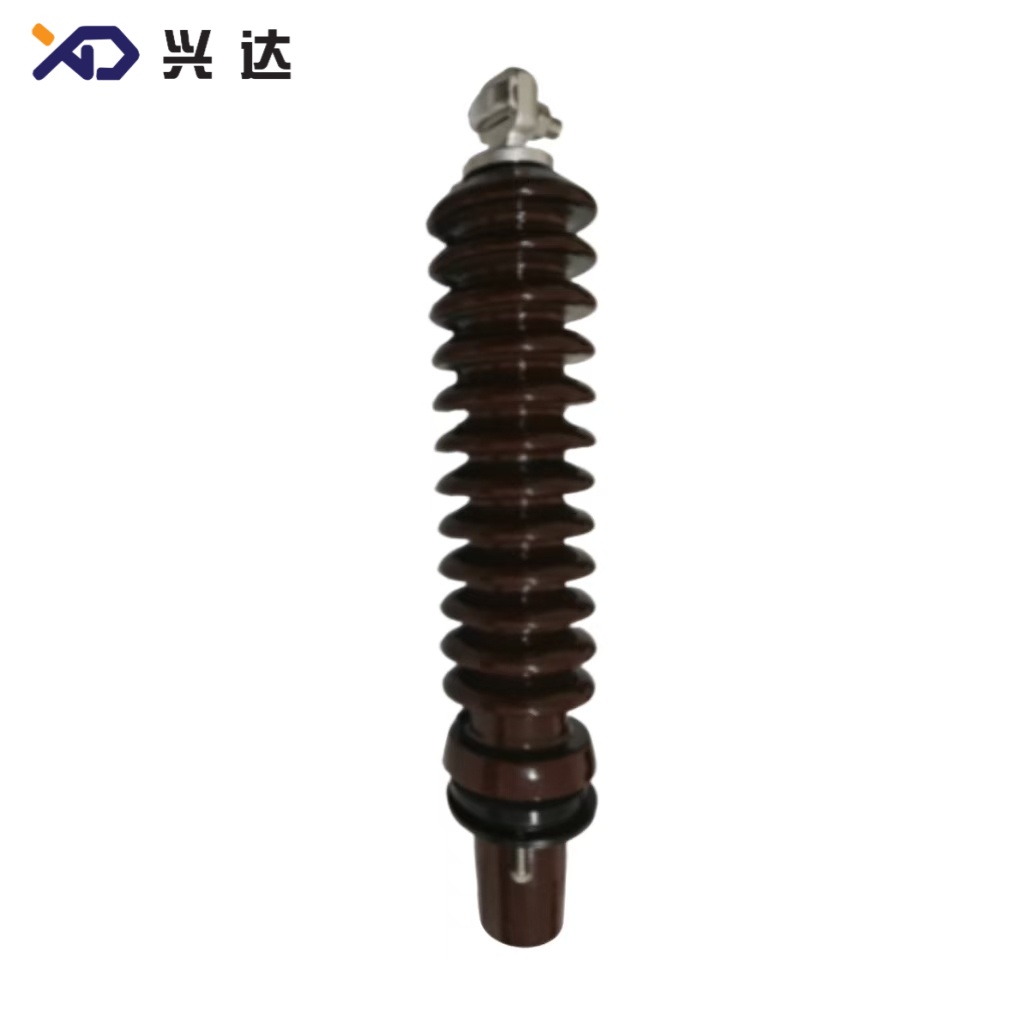
The primary functions of ANSI transformer bushings are electrical insulation, current conduction, mechanical support, and sealing isolation. Structurally, they typically consist of a conductive rod, insulating body, mounting flange, sealing gasket, and external terminal. The conductive part usually adopts high‑purity copper or copper alloy with optimized cross‑section to reduce resistance and heat generation, supporting continuous current ratings from 100 A to 5000 A to match transformer capacity.
The insulating body is the core component. Most ANSI bushings use wet‑process high‑strength porcelain with uniform glazing, excellent hydrophobicity, and resistance to pollution, ultraviolet radiation, and temperature cycling. Some outdoor or heavy‑pollution models use silicone rubber composite insulation for better seismic and impact resistance. The design strictly controls creepage distance and electrical field distribution to suppress partial discharge and avoid insulation breakdown under lightning impulse and switching overvoltage. The mounting flange and sealing system ensure oil tightness in oil‑immersed transformers, preventing oil leakage and internal insulation degradation.
3. Material Properties and Performance Advantages
ANSI bushings are designed for long‑term operation under harsh conditions, with outstanding material and performance advantages:
- Insulation reliability: Porcelain or silicone rubber materials provide stable dielectric strength and low loss, meeting power‑frequency withstand and lightning impulse requirements. For example, 15 kV class bushings typically withstand 38 kV AC for 1 minute, and 38 kV class up to 95 kV AC for 1 minute.
- Thermal stability: Compliant with thermal rating requirements, the hot‑spot temperature rise is limited within 80 K. Stable performance is maintained under heavy load and cyclic temperature changes, with efficient heat dissipation to avoid overheating damage.
- Mechanical robustness: High resistance to cantilever force, short‑circuit electromagnetic force, vibration, and shocks during transportation and installation. The one‑piece porcelain structure enhances integrity and service life.
- Environmental adaptability: Suitable for indoor and outdoor applications, withstanding temperatures from ‑50 °C to 155 °C, resistant to humidity, salt fog, dust, and chemical corrosion, suitable for coastal, industrial, and high‑altitude areas.
- Sealing durability: High‑quality gaskets and optimized flange design ensure long‑term oil and air tightness, reducing maintenance frequency.
4. Typical Specifications and Application Scenarios
ANSI transformer bushings are widely used in distribution transformers, pad‑mounted transformers, power transformers, ring‑main units, and switchgear in North America, Southeast Asia, the Middle East, and other regions adopting American standards. Typical specifications include:
- Low‑voltage type: 1.2 kV, current 100 A–2500 A, for distribution transformer low‑voltage outlets.
- Medium‑voltage type: 15 kV, 25 kV, 34.5 kV, current 200 A–600 A, for conventional distribution and substation transformers.
- High‑reliability type: 38 kV class, with composite insulation or full‑shield design, for heavy‑pollution, high‑seismic, and compact equipment.
They are also widely used in industrial power systems, renewable energy stations, and data center power supplies, supporting stable grid operation and flexible capacity expansion.
5. Selection Principles and Quality Control
When selecting ANSI transformer bushings, users should focus on voltage level, rated current, insulation material, installation dimensions, and environmental conditions to ensure matching with transformer parameters. Key considerations include:
- Confirm compliance with ANSI/IEEE C57.19 series standards and complete factory tests (AC withstand, partial discharge, contact resistance, thermal stability).
- Choose porcelain or composite insulation based on indoor/outdoor and pollution level.
- Verify mounting flange, bolt circle, and terminal type for interchangeability.
- Evaluate short‑circuit withstand capability to ensure safety under fault conditions.
Reputable manufacturers conduct strict quality control, including material inspection, semi‑finished testing, and full‑routine tests, to ensure each bushing meets design and operational requirements.
6. Conclusion
ANSI‑standard transformer bushings are key components linking transformer internal and external circuits, with standardized design, excellent insulation, thermal and mechanical performance, and high compatibility. With the expansion of global power construction and the popularization of American standard systems, they will continue to be widely used in power transmission and distribution. For equipment manufacturers and grid operators, selecting high‑quality ANSI bushings is critical to improving transformer reliability, reducing operation and maintenance costs, and ensuring safe and stable power supply.
Categories
Contact Us
Contact: Tianjin Delda Trading Co., Ltd
WhatsApp: +86 13662056855
Tel:
E-mail: solomon20210701@tjxddq.com
Add: Unit‑101, Workshop 3, Bozhong Automobile Industrial Park, No.5 Xianghui Road, Intersection of Xianghui Road and Gaoying Road, Beizhakou Town, Jinnan District, Tianjin, China