Product
Dry-Type Transformers Explained: Types, Ratings, Applications and How to Choose the Right One
Dry-Type Transformers Explained: Types, Ratings, Applications and How to Choose the Right One

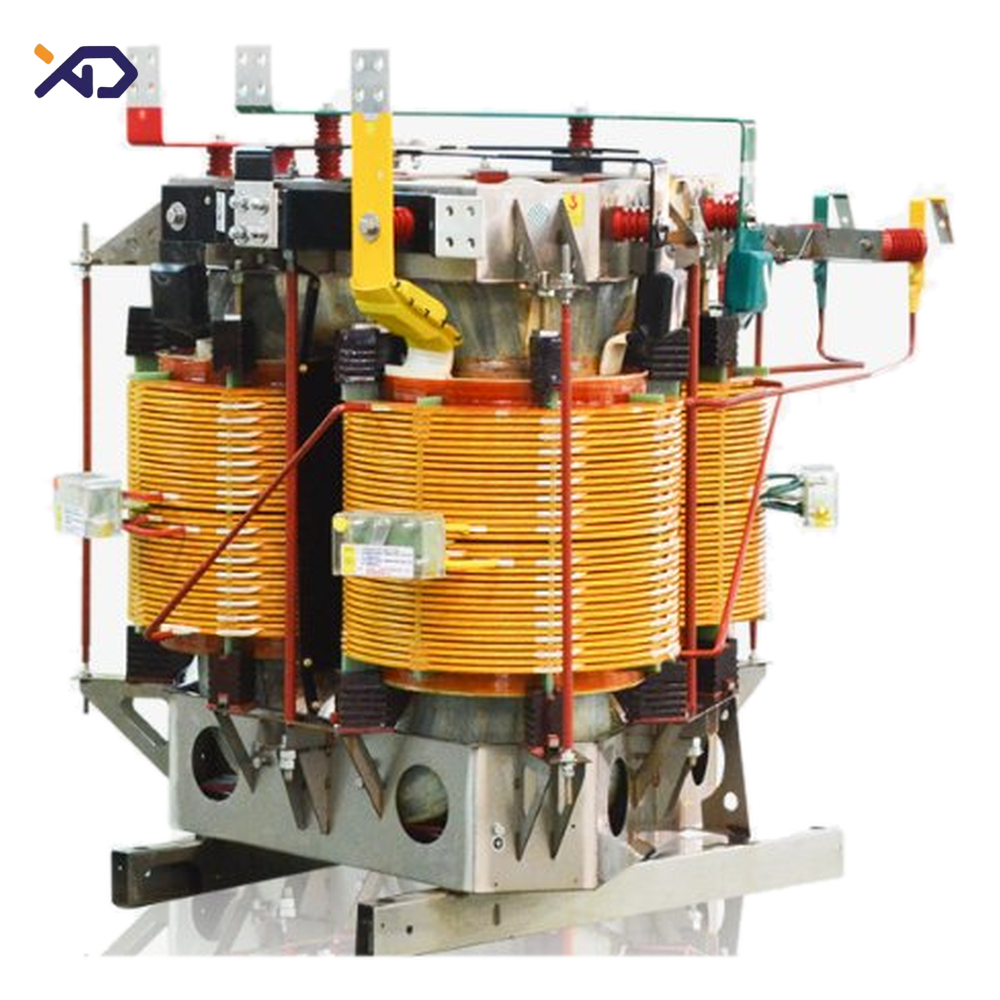
An amorphous alloy three-dimensional wound-core dry-type transformer (30~3300kVA, up to 35kV)
What Is a Dry-Type Transformer and Why Does It Matter?
A dry-type transformer transfers electrical power between voltage levels using air and solid insulation — typically epoxy resin or aramid (nomex) paper — instead of mineral oil. Because there is no flammable liquid inside, dry-type units can be installed right next to people and equipment: in basements, shopping malls, hospitals, data centers, tunnels, offshore platforms and renewable energy plants. They are fire-safe, leak-free, and virtually maintenance-free, which is why utilities and industry around the world keep shifting from oil-filled to dry-type technology.
The Main Families of Dry-Type Transformers
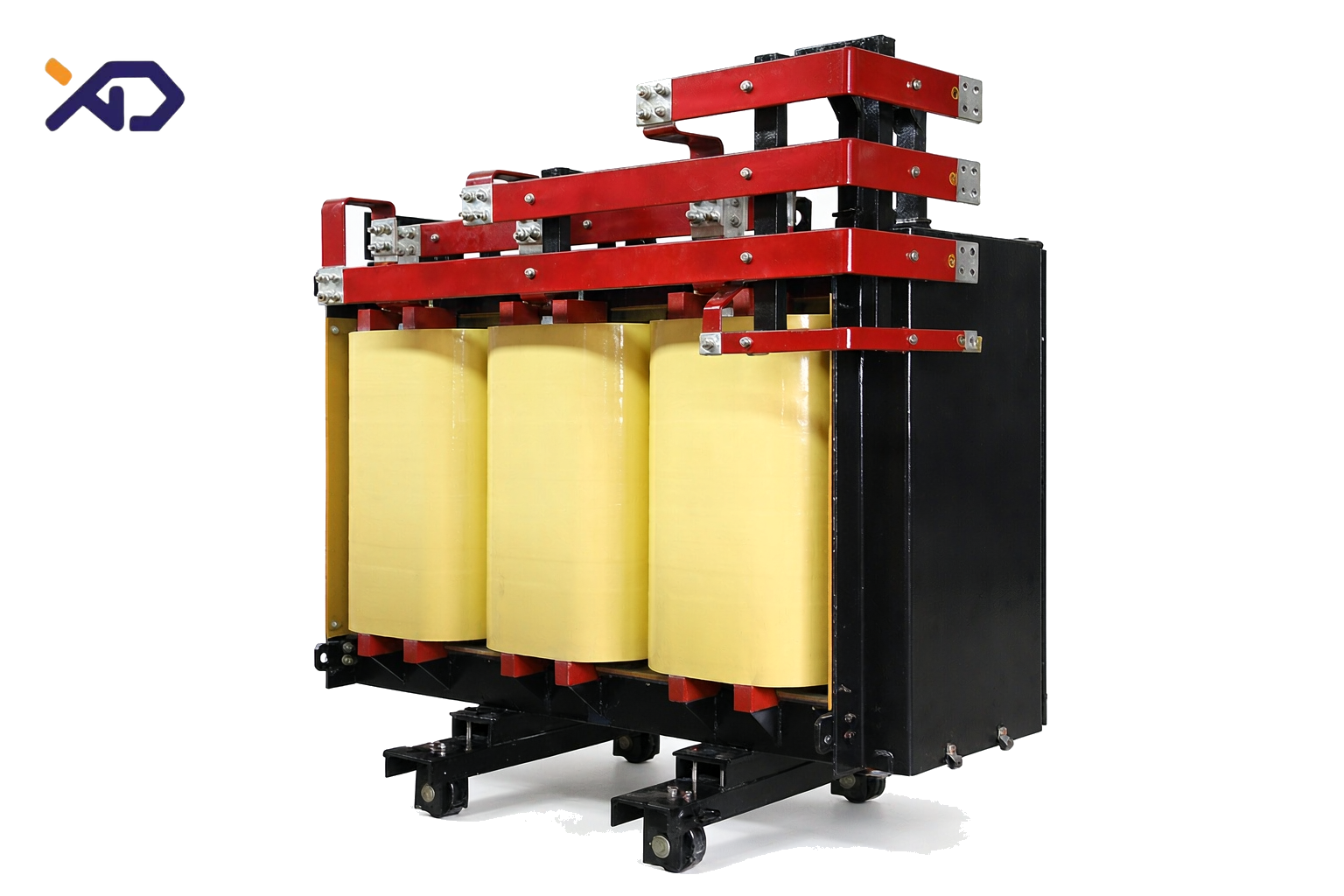
1. Cast resin (epoxy) distribution transformers. This is the workhorse family. High-voltage and low-voltage windings are vacuum-cast in epoxy resin, giving excellent moisture resistance, self-extinguishing behavior and partial-discharge levels as low as 10pC. Typical ratings run from 30kVA to 2500kVA at 10kV or 35kV class, converting 10kV down to 400V for factories, buildings and commercial centers. Modern designs meet first-tier energy efficiency standards such as China GB 20052-2024 (NX1) and IEC 60076, with low losses and low noise.
2. Amorphous alloy transformers. By replacing the conventional silicon-steel core with an amorphous metal ribbon, no-load losses drop by 70% to 80%. Over a 30-year service life, a single unit can avoid more than 100 tonnes of CO₂ emissions. Models such as the SC(B)H17 class (30~2500kVA, up to 35kV) are ideal for data centers, urban grids and any site where transformers stay energized around the clock.
3. Three-dimensional wound-core transformers. Instead of stacked laminations, the core is wound from continuous strips into a triangular, three-dimensional symmetry. The result: lower no-load loss, lower temperature rise, remarkably quiet operation and excellent short-circuit strength. Combined with a fully insulated hybrid insulation system, these units (30~3300kVA, up to 35kV) are among the most compact and eco-friendly dry-type products on the market.
4. Medium-voltage power transformers. For the upper end, 35kV-class dry power transformers reach 800kVA to 25MVA. Fully sealed vacuum casting withstands 70kV power-frequency test voltage, and special versions operate at 4,500 meters altitude and down to -40°C — proven in highland substations, airports, hospitals and chemical plants.
5. Non-encapsulated (ventilated) transformers. Not every dry type is cast in resin. Open-wound units use vacuum-pressure-impregnated (VPI) windings with nomex or similar insulation, protected by a ventilated enclosure. They are lighter, easier to repair in the field, and popular in North America.
6. Special-purpose designs. Real projects rarely stop at standard units, and that is where engineered-to-order dry types shine:
· Split-winding transformers (SCF series, 630kVA~16MVA): two independent low-voltage windings supply two separate busbars from one unit, cutting substation floor space by about 45% while keeping critical loads isolated.
· On-load tap changing transformers (SCZ series, 2000~25000kVA): an integrated vacuum tap changer adjusts voltage under load — essential where grid voltage fluctuates.
· Rectifier transformers (ZBSC series): dual- or three-winding designs with strong harmonic withstand for electroplating, metallurgy and rail traction.
· Renewable energy transformers: nacelle transformers for wind turbines (compact, vibration-resistant, high-humidity proof) and PV/storage station transformers (SC(B)12 class, 1000~10000kVA) with wide ambient tolerance and CFD-optimized cooling.
· Isolation transformers (SG series, 10~200kVA): fully customizable primary and secondary voltages for machine-level safety and voltage matching.
What Do the Type Codes Mean?
Dry-type model codes look cryptic but follow a simple logic. S stands for three-phase, C for cast resin (epoxy), B for foil winding on the low-voltage side, and H after the letter group indicates an amorphous alloy core. The number that follows — 13, 18, and so on — is the performance-generation marker: an SC(B)18 is designed to the newest first-tier efficiency standard, while SC(B)H17 combines cast-resin construction with amorphous cores. Letters such as F (split winding) or Z (on-load tap changing) describe the special construction. Once you can read the code, a datasheet tells you the cooling class (ONAN self-cooled, AF forced-air), the insulation class (F = 155°C, H = 180°C) and the protection level, which on well-built units can reach IP54.
Key Advantages Over Oil-Filled Transformers
· Fire safety: self-extinguishing epoxy insulation, no oil spills, no fire-protection pits required.
· Overload capability: with forced-air fans, most designs deliver 40% to 50% extra capacity for short periods.
· Low maintenance: no oil sampling, no regassing; smart temperature controllers monitor winding hot-spots automatically.
· Environmentally friendly: no oil to dispose of, cores fully recyclable, and amorphous designs slash lifetime carbon emissions.
· Installation freedom: indoors, offshore, underground, on nacelles — wherever oil units are impractical.
How to Choose the Right Unit
Start with four questions. Voltage: what is your primary voltage — 10kV, 20kV or 35kV? Capacity: size for present load plus 20~30% growth, then check whether an AF fan can cover peak demand instead of oversizing. Environment: altitude above 1,000m, tropical humidity, coastal salt fog or -40°C cold all call for special versions. Special function: do you need dual outputs, voltage regulation under load, or harmonic-rich rectifier duty? Specifications worth confirming with any supplier include voltage ratio, impedance, insulation class, noise level, protection class and efficiency tier — all of which can be customized to the project.
Categories
Contact Us
Contact: Tianjin Delda Trading Co., Ltd
WhatsApp: +86 13662056855
Tel:
E-mail: solomon20210701@tjxddq.com
Add: Unit‑101, Workshop 3, Bozhong Automobile Industrial Park, No.5 Xianghui Road, Intersection of Xianghui Road and Gaoying Road, Beizhakou Town, Jinnan District, Tianjin, China