Transformer Accessories
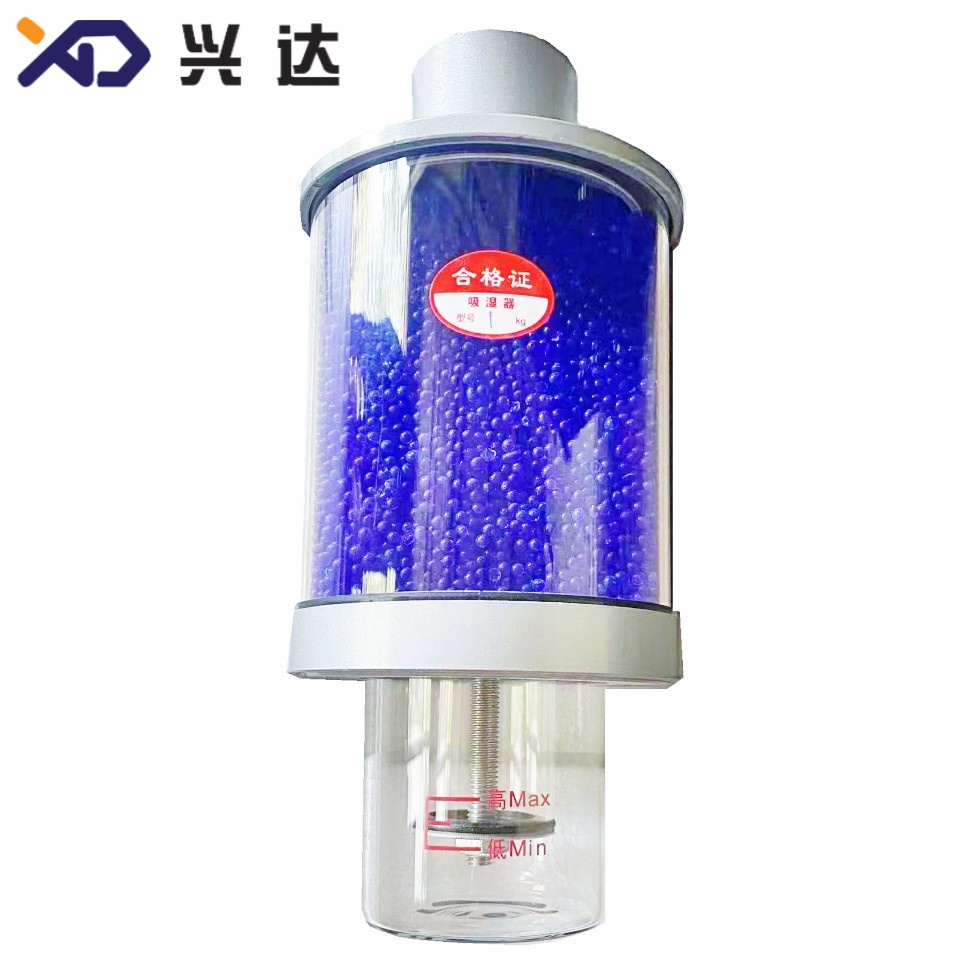
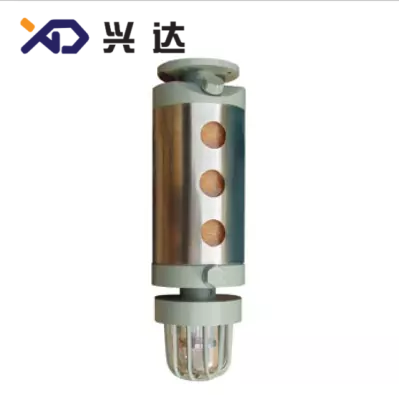
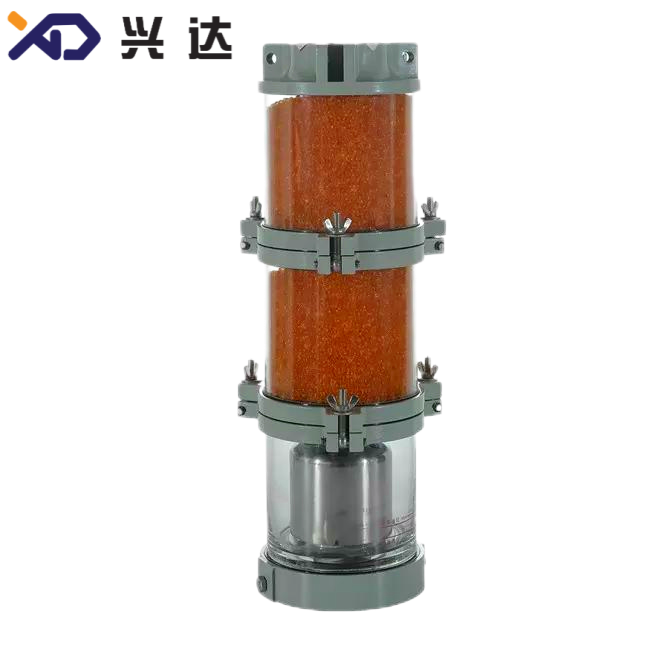
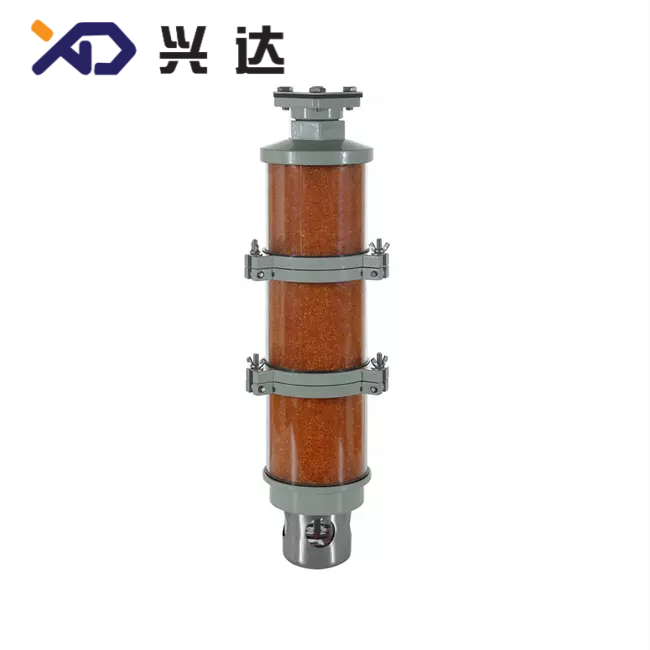
Transformer Desiccant Breather with Color Changing Silica Gel Dehumidification
Transformer Desiccant Breather: Definition, Types, Specifications, Advantages & Selection Guide
Introduction of Transformer Desiccant Breather
Working Principle & Basic Structure
- Transparent Housing: Usually acrylic or glass cylinder, allowing visual inspection of desiccant color.
- Color-Changing Desiccant: Indicating silica gel, typically blue when dry and turns pink/magenta after absorbing moisture.
- Oil Seal Cup: Filled with transformer mineral oil, used for dust filtration and preventing direct air shortcut.
- Upper Connection Flange / Thread: Connects to the conservator breather pipe.
- Internal Partition Screens: Prevent desiccant particles from flowing into transformer pipelines.
Air Circulation Process
- Air Inhalation: External air passes through oil seal to remove dust, then flows upward through silica gel layer to remove water vapor; dry clean air enters the transformer conservator.
- Air Exhaustion: Hot air discharged from the conservator passes through desiccant and oil cup before releasing to atmosphere. The outgoing air flow has minimal impact on desiccant performance.
Common Adopted Standards
Main Types of Transformer Desiccant Breathers
1. Single-Cylinder Standard Desiccant Breather
2. Double-Cylinder Series Desiccant Breather
3. Intelligent Online Monitoring Desiccant Breather
4. Small Compact Mini Breather
Universal Technical Specification Table for Transformer Desiccant Breathers
| Parameter Item | Single-Cylinder Standard Breather | Double-Cylinder Series Breather | Intelligent Monitoring Breather | Mini Compact Breather |
|---|---|---|---|---|
| Desiccant Material | Color-indicating silica gel | Color-indicating silica gel | Color-indicating silica gel | Color-indicating silica gel |
| Dry / Saturated Color | Blue → Pink | Blue → Pink | Blue → Pink | Blue → Pink |
| Standard Silica Gel Load | 0.5kg ~ 5kg | 3kg ~ 10kg | 2kg ~ 8kg | 0.2kg ~ 0.5kg |
| Housing Material | Transparent glass / Acrylic | Transparent glass / Acrylic | Reinforced acrylic plastic | Acrylic plastic |
| Connection Type | Threaded / Flange | Threaded / Flange | Threaded / Flange | Thread connection |
| Operating Temperature Range | -40°C ~ +75°C | -40°C ~ +75°C | -40°C ~ +75°C | -35°C ~ +70°C |
| Compatible Insulating Oil | Mineral transformer oil, natural ester oil | Mineral transformer oil, natural ester oil | Mineral transformer oil, natural ester oil | Mineral transformer oil |
| Oil Seal Capacity | 50ml ~ 200ml | 150ml ~ 300ml | 100ml ~ 250ml | 20ml ~ 60ml |
| Main Installation Object | Distribution transformers | Medium power transformers | Substation main transformers | VT, CT, small reactors |
| Special Feature | Low cost, easy maintenance | Two-stage deep dehumidification | Remote humidity monitoring, optional auto regeneration | Space-saving lightweight structure |
Core Advantages of Transformer Desiccant Breathers
1. Effectively Prevent Moisture Ingress into Transformer System
2. Simple Condition Monitoring via Visual Color Change
3. Dual Filtration with Oil Seal Reduces Contamination
4. Wide Specification Coverage for Various Equipment Capacities
5. Convenient Installation and Low Lifecycle Maintenance Cost
6. Strong Environmental Adaptability
Standard breathers operate stably under extreme low temperature, high temperature and cyclic temperature changes. With proper housing material selection, they can serve inland, industrial, coastal and plateau power facilities.
Typical Application Scenarios
- Oil-immersed distribution transformers for urban and rural power grids
- Pad-mounted transformers and pole-mounted transformers
- Medium and large power transformers inside electrical substations
- Step-up transformers for photovoltaic power plants and wind farms
- Oil-filled voltage transformers (VT) and current transformers (CT)
- Industrial transformers for chemical plants, mining facilities and water treatment stations
- Mobile power transformers and backup power oil immersed equipment
- Reactors equipped with oil conservator expansion systems
Transformer Desiccant Breather Selection Guide
- Determine Required Desiccant Loading CapacitySelect silica gel weight based on transformer conservator volume and local climate. High humidity coastal areas or tropical regions should choose one size larger than standard recommendation to extend service interval between replacements.
- Select Suitable Connection StructureCheck thread size or flange dimension of the conservator breathing pipe to ensure matching connection interface. Avoid modification during on-site installation.
- Choose Housing Material According to Operating EnvironmentGlass housing offers excellent transparency; acrylic material delivers better impact resistance, suitable for sites with risk of mechanical collision.
- Evaluate Demand for Intelligent Monitoring FunctionsFor unattended substations and important main transformers, intelligent breathers with humidity signal output can improve predictive maintenance level. Conventional single-cylinder models are sufficient for common distribution transformers.
- Confirm Compatibility with Insulating Oil TypeVerify sealing rubber materials if the transformer uses environmentally friendly ester insulating oil to prevent gasket swelling and air leakage.
Routine Maintenance & Common Troubleshooting
Regular Maintenance Checklist
- Carry out visual inspection every 1–3 months: observe silica gel color, check oil level inside oil seal cup, inspect housing for cracks and connection points for air leakage.
- Replenish insulating oil in the oil cup when liquid level falls below standard mark.
- Replace or regenerate silica gel once most particles turn pink.
- Clean dust and dirt on the outer surface of the transparent housing regularly to guarantee clear observation.
Check connecting pipelines for blockage; blocked breathing pipe will cause abnormal pressure fluctuation inside the conservator.
Common Operational Problems
- Silica gel turns pink rapidly: Usually caused by excessive ambient humidity, air leakage at connection joints or undersized breather model.
- Oil seal cup lacks oil continuously: Air leakage or oil evaporation; supplement qualified transformer oil and check sealing gaskets.
- Housing crack and silica gel leakage: Impact damage during installation or aging of plastic housing.
- Poor air circulation: Internal pipeline blocked by desiccant debris; disassemble and clean internal filter screens.
Safety Reminder: Avoid disassembling the breather during transformer stable high-load operation. Prevent broken desiccant particles from falling into transformer pipelines during silica gel replacement.
Conclusion
Categories
Contact Us
Contact: Tianjin Delda Trading Co., Ltd
WhatsApp: +86 13662056855
Tel:
E-mail: solomon20210701@tjxddq.com
Add: Unit‑101, Workshop 3, Bozhong Automobile Industrial Park, No.5 Xianghui Road, Intersection of Xianghui Road and Gaoying Road, Beizhakou Town, Jinnan District, Tianjin, China