Enamelled aluminum wire
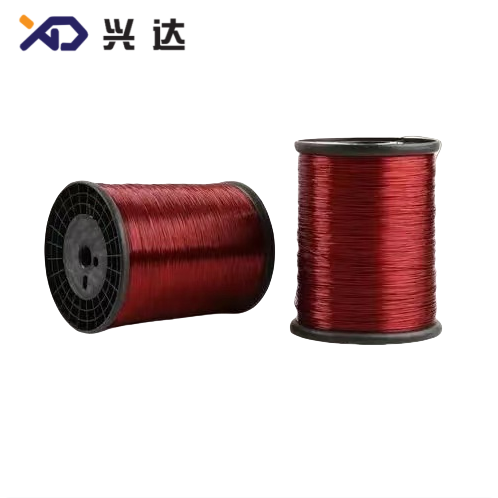
Enamelled Aluminum Wire – Insulated Winding Wire for Transformers & Motors
Enamelled Aluminum Wire: Complete Technical Guide for Magnet & Winding Applications
1. Definition of Enamelled Aluminum Wire
All qualified enamelled aluminum wire follows global standards mainly including IEC 60317 series, NEMA MW specifications and corresponding national standard requirements. Manufacturers produce both round and rectangular profiles with multiple thermal resistance classes and enamel types to adapt to different operating temperatures, voltage levels and environmental conditions. This winding material is extensively adopted in oil immersed transformers, distribution equipment, household electrical motors, renewable energy auxiliary power devices and industrial inductors worldwide.
2. Basic Structure & Manufacturing Process
2.1 Main Structure of Enamelled Aluminum Wire
- Aluminum conductor: Annealed EC-grade pure aluminum rod, available in round or rectangular shape
- Primary enamel layer: Base insulation coating offering basic dielectric performance
- Secondary overcoat (optional): Extra enamel layer for enhanced heat shock, abrasion and chemical resistance
- Uniform surface finish: Continuous coating without pinholes, bubbles or bare conductor exposure
2.2 Simplified Production Flow
- Aluminum rod drawing to target wire dimension
- High-temperature annealing to improve ductility and flexibility
- Multiple passes of enamel dipping and curing baking
- Offline testing for insulation integrity, dimension and thermal performance
Spooling and packaging for winding production
3. Classification of Enamelled Aluminum Wire
| Wire Type | Conductor Shape | Enamel Insulation System | Typical Thermal Class | Key Characteristics | Primary Application |
|---|---|---|---|---|---|
| Polyurethane Enamelled Aluminum Wire (UEW) | Round | Polyurethane | 130°C (Class B) | Direct solderable without stripping enamel; thin uniform film | Small inductors, low voltage household motors, mini transformers |
| Polyester Enamelled Aluminum Wire (PEW) | Round / Rectangular | Polyester resin | 155°C (Class F) | Balanced mechanical strength and dielectric property | General distribution transformers, medium voltage reactors |
| Polyesterimide Enamelled Aluminum Wire (EIW) | Round / Rectangular | Polyester-imide | 180°C (Class H) | Excellent heat resistance, good thermal shock performance | Industrial motors, medium & large oil immersed transformers |
| Composite Coated Enamelled Aluminum Wire | Round / Rectangular | Polyesterimide + Polyamide-imide | 200°C / 220°C | Superior thermal endurance, strong abrasion resistance | High-temperature variable frequency motors, heavy-duty power equipment |
| Self-Bonding Enamelled Aluminum Wire | Round | Base enamel + thermoplastic bonding layer | 130°C ~ 180°C | Coils can be bonded by heating without additional impregnation | Precision coils, small solenoids, compact electronic components |
4. Core Technical Specifications of Enamelled Aluminum Wire
| Parameter Item | Specification Description | Common Standard Options |
|---|---|---|
| Conductor Profile | Cross-section geometry | Round wire, rectangular wire |
| Nominal Size | Diameter for round wire; width × thickness for rectangular wire | Round: 0.20 mm – 8.0 mm; Rectangular: 0.8 mm – 16.0 mm |
| Insulation Grade | Enamel thickness grade | Grade 1 (thin film), Grade 2 (thick film) |
| Thermal Class | Maximum continuous operating temperature | 130°C, 155°C, 180°C, 200°C, 220°C |
| Standard System | International testing & dimension standard | IEC 60317, NEMA MW 1000 |
| Breakdown Voltage | Minimum dielectric withstand of enamel film | Determined by wire diameter and insulation grade |
| Elongation Rate | Ductility requirement after annealing | Minimum 15% ~ 30% depending on wire size |
| Solderability | Whether enamel can be removed by molten solder | Solderable (UEW type) / Non-solderable |
Key Selection Guidelines
- Low-temperature small component projects can select polyurethane enameled aluminum wire for convenient soldering.
- Oil immersed power transformers usually adopt polyester or polyesterimide enamelled aluminum wire with Class 155 or Class 180 thermal rating.
- Equipment with frequent temperature cycling requires composite double coating to avoid enamel cracking.
Rectangular enamelled aluminum wire improves winding space factor for large transformer and reactor coils.
5. Enamelled Aluminum Wire vs Enamelled Copper Wire
| Performance Index | Enamelled Aluminum Wire | Enamelled Copper Wire |
|---|---|---|
| Electrical Resistivity (20°C) | Higher; approx. 1.6 times copper | Lower, superior conductivity |
| Density & Weight | Lightweight; nearly 50% weight reduction at equivalent ampacity | Higher density, heavier coil assembly |
| Raw Material Cost | More economical for large winding volume | Higher material cost |
| Tensile Strength & Ductility | Softer, lower tensile strength; needs careful winding control | Higher mechanical strength, tolerant to complex winding process |
| Required Cross-section | Larger cross-section to achieve equal current carrying capacity | Smaller conductor size for the same load current |
| Corrosion Performance | Forms stable oxide protective layer | Good oxidation resistance under normal environment |
| Best Application Scenario | Cost-sensitive transformers, weight-limited equipment, medium voltage distribution products | High power density equipment, compact high-current coils, frequent vibration conditions |
6. Main Advantages of Using Enamelled Aluminum Wire
- Reduce overall coil weight, lowering transportation load and equipment structural burden
- Optimize total material cost for large-scale transformer and motor manufacturing
- Stable insulation performance meeting international magnet wire testing standards
- Multiple enamel formulas and thermal classes available to match diverse operating conditions
- Good winding performance after proper annealing, suitable for automated coil winding machines
Mature supply chain supporting both small gauge round wire and heavy rectangular profiles
7. Typical Application Fields of Enamelled Aluminum Wire
- Oil-immersed distribution transformers and small power transformers
- Shunt reactors and voltage regulating equipment
- HVAC fan motors, household appliance electrical motors
- Solar power station auxiliary transformers and inductors
- Industrial control solenoids, electromagnetic valves
- Energy storage medium voltage coil components
General low and medium voltage electrical winding equipment
8. Factory Test Requirements for Qualified Enamelled Aluminum Wire
- Visual and dimensional inspection of conductor and enamel thickness
- Breakdown voltage test to verify insulation integrity
- Elongation and winding test to check enamel anti-cracking performance
- Thermal shock test for evaluating temperature change resistance
- Solderability test (for polyurethane type enamelled aluminum wire)
Partial visual check for surface defects, pinholes and scratches
9. Common Operation Precautions
- Avoid excessive tension during winding to prevent enamel film abrasion or cracking.
- Store spools in dry indoor environment to prevent surface oxidation of aluminum conductor terminals.
- Termination connection needs proper crimping or welding process to avoid contact oxidation and overheating.
- Match thermal class with actual winding temperature rise to prevent accelerated insulation aging.
For outdoor and high humidity equipment, select enamel types with enhanced hydrolysis resistance.
10. Frequently Asked Questions
Q1: Can enamelled aluminum wire directly replace enamelled copper wire in transformer design?
Q2: What is the difference between Grade 1 and Grade 2 enamelled aluminum wire?
Q3: Is enamelled aluminum wire suitable for high frequency transformers?
Categories
Contact Us
Contact: Tianjin Delda Trading Co., Ltd
WhatsApp: +86 13662056855
Tel:
E-mail: solomon20210701@tjxddq.com
Add: Unit‑101, Workshop 3, Bozhong Automobile Industrial Park, No.5 Xianghui Road, Intersection of Xianghui Road and Gaoying Road, Beizhakou Town, Jinnan District, Tianjin, China