Product
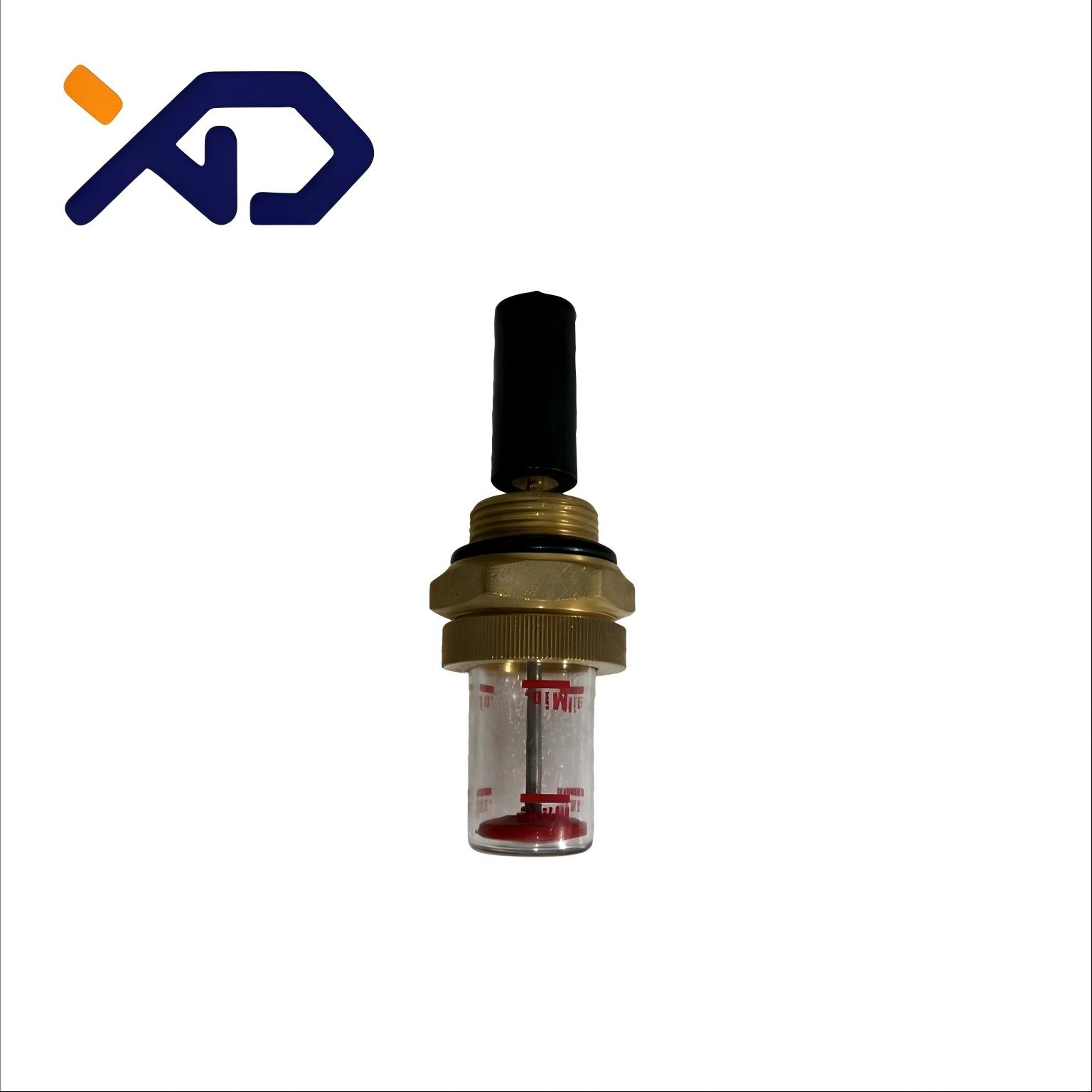
Technical Analysis of Thread Specifications for Transformer Float-Type Oil Level Gauge
Technical Analysis of Thread Specifications for Transformer Float-Type Oil Level Gauge
Identification, Conversion and Foreign Trade Application of Pipe Thread and Unified Inch Screw Thread
Keywords: Transformer Accessories | Float Oil Level Gauge | Pipe Thread | Unified Screw Thread | Foreign Trade
Among the various supporting components of oil-immersed transformers, the float-type oil level gauge is a key component for monitoring the insulating oil level inside the oil tank. It directly reflects the variation of the oil level and provides basic monitoring data for the safe and stable operation of transformers. As the critical connecting structure between the oil level gauge and the transformer tank, the thread interface directly determines fitting performance, sealing effect and overall protection capacity. Correct identification of thread types and a clear distinction between pipe thread and unified inch screw thread play a vital practical role in production, procurement, foreign trade order processing and on-site installation.
As shown in the engineering drawing of the float-type oil level gauge, the connection port is marked G1-1/2. This is a widely used non-sealing cylindrical pipe thread complying with the Chinese standard GB/T 7307-2001. The symbol G derives from the pinyin initial of the Chinese word for “pipe”. This thread is designed for the connection of vessels and pipelines and focuses on sealing performance at the joint, which is essentially different from the design objective of ordinary fastening thread. Taking the common G1/2 pipe thread as an example, the outer diameter is 20.956 mm, the inner diameter is 18.632 mm, and the pitch is 1.814 mm with 14 threads per inch. The fixed conversion basis is 1 inch equal to 25.4 mm, and the pitch equals 25.4 divided by the number of threads per inch. Within the transformer industry, G-series cylindrical pipe threads are widely adopted for tank openings, oil level gauges, drain valves and pressure relief valves. In foreign trade business, the compatibility difference between DIN pipe thread and domestic G thread shall also be noted, so as to avoid field assembly failure caused by mismatched dimensions.
In daily foreign trade practice, the G-series pipe thread is frequently confused with the American unified inch thread UNC/UNF. Although both use the inch as the measuring unit, they differ completely in design system and application scenario. UNC, UNF, UNFF and UN belong to the American unified thread system and are widely used for bolt fastening on European and American equipment. The complete marking format is: thread diameter - threads per inch, series code - tolerance class. For instance, 3/8-16 UNC-2A: 3/8 means the outer diameter in inch, which is multiplied by 25.4 for millimetre conversion; 16 refers to threads per inch; UNC stands for coarse thread, UNF for fine thread, UNFF for extra-fine thread, and UN for the constant-pitch series. The suffix 2A or 2B denotes the thread tolerance class, with “A” for external thread and “B” for internal thread.
Take 3/16-32 UNF-1B as a calculation example. 3/16 is the major diameter and 32 means 32 threads per inch. UNF is short for United Fine Thread. The pitch is 25.4 divided by 32, which equals 0.794 mm; the outer diameter is 25.4 multiplied by 3 and divided by 16, which equals 4.7625 mm. The “C” in UNC means Coarse and the “F” in UNF means Fine. American unified threads are mainly applied to bolt fastening and are not suitable for the pressure-bearing sealing connection of a tank housing. When handling orders, if a buyer confuses the thread types and marks UNC/UNF instead of G pipe thread, the product will be scrapped and returned, causing unnecessary economic losses.
In conclusion, staff engaged in transformer accessory business shall be familiar with both the parameters of domestic GB pipe thread and the marking rules and conversion methods of American unified thread. When handling overseas inquiries, thread codes on drawings shall be checked carefully, pipe thread shall be distinguished from fastening thread, and interface standards shall be confirmed in advance, so as to eliminate dimension errors at the source and guarantee order delivery as well as the normal operation of customer equipment.
Categories
Contact Us
Contact: Tianjin Juyida Technology Co., Ltd
WhatsApp: +86 13662056855
Tel:
E-mail: solomon20210701@tjxddq.com
Add: Unit‑101, Workshop 3, Bozhong Automobile Industrial Park, No.5 Xianghui Road, Intersection of Xianghui Road and Gaoying Road, Beizhakou Town, Jinnan District, Tianjin, China